The Curb as Infrastructure: A 2026 Audit for Bus Stop Quality
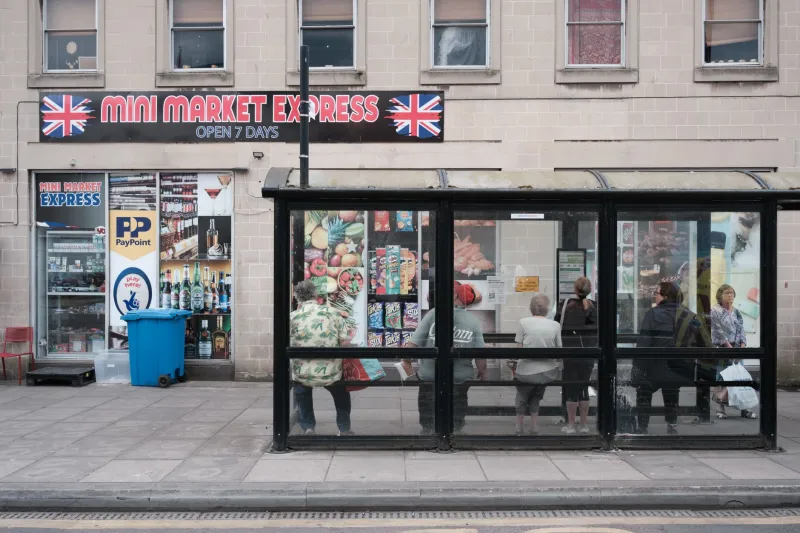
A bus stop is the point at which a region makes its first impression on a passenger. It is also the point at which public money, local authority maintenance, operator information and accessibility standards meet. Yet stops are routinely classified as street furniture, funded from small capital pots and assessed only when a shelter is damaged or a timetable case is replaced. That classification is now hard to defend. In 2026, with local transport authorities preparing spending plans and operators working through partnership arrangements, the quality of the stop network deserves to be treated as essential regional infrastructure.
The argument is not that every stop needs a glass shelter and a digital display. It is that the standard of the stop should be deliberate, auditable and linked to the role it plays in the network. A stop serving a hospital, a college or an isolated village carries a different weight from a stop on a high-frequency urban corridor. Treating all stops alike produces waste at one end and neglect at the other. A graded standard produces better decisions.
Why the stop carries more weight than the strategy
Strategy documents describe corridors, growth zones and modal shift. Passengers experience the network at the curb. A missing seat, poor lighting or an inaccessible footway undermines confidence in the whole service, including the parts that work well. For older passengers, disabled people and those without a car, the stop is not a convenience; it is the threshold to participation in work, health care and social life.
There is also an economic signal in the physical condition of a stop. A well-maintained shelter with clear information suggests that the service is cared for. A broken timetable case and an unlit approach path suggest the opposite, regardless of how frequent the bus may be. In regional development terms, the stop is a small but highly visible piece of public realm. It shapes perceptions of a town centre, a business park or a rural interchange as surely as paving, signage or street lighting.
What good looks like: a six-part standard
A workable audit should assess six dimensions. Each can be scored on a simple one-to-five scale, with photographic evidence and a short note. The dimensions are:
- Shelter and weather protection. Is there a roof, and is it in good repair? Does it provide shade and wind protection without blocking sightlines?
- Lighting and personal safety. Is the stop lit, and is the approach path lit? Are there clear sightlines, and is the stop free from obstructions that create hiding places?
- Seating and resting points. Is there a perch or bench suitable for older and disabled passengers? Is there space for a wheelchair or pushchair without blocking the footway?
- Accessibility. Is the kerb height appropriate? Is the footway wide enough? Are there dropped kerbs, tactile paving and a level boarding area? Does the stop meet the requirements of the Equality Act 2010 in practice, not just on paper?
- Information. Is the stop name clear? Is there a current timetable, a route map and, where available, real-time information? Is the information available in accessible formats and by phone or app?
- Maintenance and ownership. Is the stop clean, free from graffiti and vegetation, and is there a named responsible body for repairs? Is the asset recorded in the authority's register?
A stop does not need full marks on every dimension to be useful. A rural stop may score low on shelter but high on information and accessibility. The purpose of the score is to make trade-offs visible and to prevent the worst stops from remaining invisible.
A practical 2026 audit framework
An audit should be proportionate. A full survey of every stop in a large county is expensive; a risk-based sample is not. A sensible 2026 approach has four stages.
First, compile the asset list. Many authorities hold incomplete records. The audit should reconcile the authority's register with operator data and with the stops that actually exist on the ground. This is unglamorous work, but it is the foundation of any funding case.
Second, score a representative sample and every stop on priority routes. Priority routes should include those serving hospitals, colleges, employment sites, town centres and rural communities with limited alternative transport. The sample should include stops in different ownership categories: local authority, parish council, operator and private land.
Third, apply a prioritisation matrix. Score each stop for current condition, passenger footfall, accessibility need, network role and cost to fix. A stop with high footfall and poor accessibility should rise above a low-use stop with a cosmetic defect. The matrix should be published in summary form so that communities can see why some stops are upgraded first.
Fourth, publish a short stop improvement plan with cost bands and delivery routes. The plan should distinguish between quick wins, such as cleaning, timetable replacement and vegetation clearance, and capital works, such as shelter replacement, lighting and kerb adjustments. It should also identify stops that cannot be improved without landowner agreement.
Making the funding case
The strongest funding case treats stops as a package rather than a series of isolated requests. A corridor package that combines shelter, lighting, accessibility and real-time information is easier to justify than a stand-alone shelter, because it connects to service frequency, patronage and accessibility outcomes. Local transport authorities can align stop upgrades with bus service improvement plan objectives, enhanced partnership commitments and local cycling and walking infrastructure plans. Developer contributions and section 106 agreements can also be used to secure stop improvements where new development creates additional demand.
The cost per passenger of a stop upgrade is often modest compared with larger capital schemes, but the visibility is high. That combination is politically useful. A programme of stop improvements can be delivered quickly, reported clearly and maintained locally. It also builds trust with communities that may not see major rail or road schemes for years.
Governance and maintenance
The audit is only useful if it changes ownership and maintenance behaviour. Each stop should have a named responsible body, a maintenance standard and a route for reporting defects. Real-time information should be checked against the published timetable and against the actual vehicle tracking data. Accessibility claims should be verified on site, not assumed from a desk review.
In 2026, the case for treating stops as regional infrastructure is straightforward. The stop is where the network meets the street, and where the public judges whether transport is a service or an afterthought. A graded standard, a proportionate audit and a published improvement plan would do more for regional confidence than another strategy document that never reaches the curb.