Beyond the Workshop Door: Making Depots Work for the Wider Economy
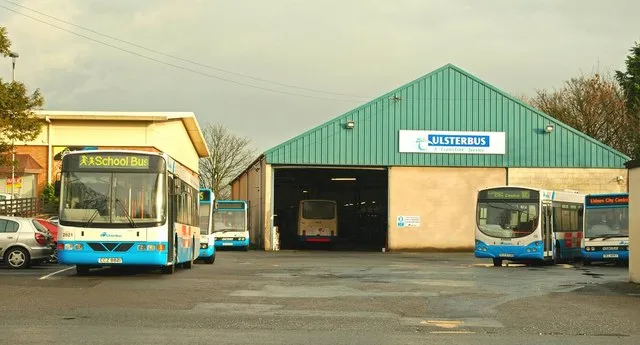
Photo: Albert Bridge, CC BY-SA 2.0, via Wikimedia Commons
At half past five in the morning, a bus depot looks like what it is: an industrial yard with engines running, a workshop full of lifting gear and a stores counter issuing parts against job cards. It is not immediately obvious as a community asset. Yet the depot is one of the few remaining places in many towns where heavy vehicle engineering is taught, practised and paid for at scale.
That matters in 2026. As fleets electrify, as rail fleets are refreshed, and as local skills budgets are devolved to combined authorities and shaped by local skills improvement plans, the question of where practical training actually happens has become urgent. Depots are part of the answer, and many operators have not yet made the case.
What a depot contains that a classroom cannot
A working maintenance facility holds a cluster of capabilities that are hard to replicate: diagnostics on live vehicles, high-voltage systems as bus and van fleets move to battery power, bodywork and paint, stores and inventory control, safety and compliance cultures, and the supervisory layer that keeps a shift running. Rail depots add bogie and wheelset overhaul, signalling equipment, composites and heavy lifting. Freight depots add load planning, refrigeration and trailer maintenance.
Most of this sits inside commercial operations and is never described in the language of skills policy. That is a missed opportunity, because the vocabulary of local growth funding is not difficult to learn and the evidence is already on site.
Apprenticeships that stay in the area
The first lever is the simplest. A depot that hosts apprentices creates training places that cannot easily be offshored and tends to retain people locally once qualified. Operators working with further education colleges, training providers and local skills improvement plans can ring-fence places, guarantee interviews at the end of programmes, and offer taster days to schools within walking distance of the site.
Where mayoral combined authorities hold adult skills funding, there is scope to align course provision with the depot's actual maintenance schedule rather than a generic syllabus. The practical test is whether the college's kit matches the depot's kit; if the workshop is running high-voltage systems and the college is teaching on older diesel rigs, the partnership is decorative.
Opening procurement to smaller firms
Depots buy constantly: components, cleaning, security, personal protective equipment, fabrication, calibration, IT, grounds maintenance. Much of that spend leaves the region by default because contracts are bundled and published late.
The remedies are unglamorous and effective. Publish a forward pipeline of expected requirements twelve months ahead. Break contracts into lots so a five-person fabricator can bid. Register on local supplier directories and with the local authority's procurement team. Use social value weighting properly rather than as a scoring formality, and pay suppliers within thirty days so small firms are not financing the operator's cash flow.
A depot that sources a meaningful share of its consumables within twenty miles is a depot with a local constituency, and a local constituency is useful when the site needs planning permission or political support.
Depots as test beds
Electrification is reshaping depot layouts across the country. Charging infrastructure, grid connections, revised parking geometry and workshop safety regimes are all being designed now, and each design decision is a small research project. Operators willing to share findings with universities and local enterprise partnerships create a form of regional innovation that does not depend on a science park.
The same applies to retrofit, remote diagnostics and data. Rail has shown what is possible: the Siemens Mobility rail village at Goole and Hitachi Rail's Newton Aycliffe facility both combine manufacturing with training and supply chain development, and smaller engineering firms across the North West, the Midlands and Scotland have built businesses around fleet overhaul. Bus operators converting depots to electric operation are, in effect, running live infrastructure trials for the electricity network operators they depend on.
A checklist for operators and local partners
- Audit what the site already does: skills, spend, equipment, spare space and spare capacity.
- Appoint a single point of contact for external partnerships, with time formally allocated.
- Agree two apprenticeship or technician pipelines with named colleges and named intakes.
- Publish a twelve-month procurement pipeline and split at least one contract into lots.
- Offer a small number of structured site visits a year to schools, colleges and job centres.
- Identify one innovation theme the depot can host, such as charging, retrofit or diagnostics.
- Agree safeguarding, insurance and health and safety protocols before any public-facing activity.
- Report annually to the local authority on skills places, local spend and outreach delivered.
Honest limits
A depot is a workplace first. Vehicle movements, lifting operations and hazardous substances make it a poor venue for general public access, and operators are right to be cautious. Partnerships work when they are designed around the operational rhythm of the site, not against it. Overselling a depot as a community hub invites disappointment; presenting it as a specialist skills and supply chain anchor is both accurate and useful.
The dividend is real, but it is earned through routine administration rather than a launch event. For operators, the return is a stronger local labour pool and a more sympathetic planning environment. For councils and member organisations, it is a growth asset that already has a car park, a workshop and a reason to exist.