Seven Working Rooms: Practical Member Support for Transport Organisations in 2026
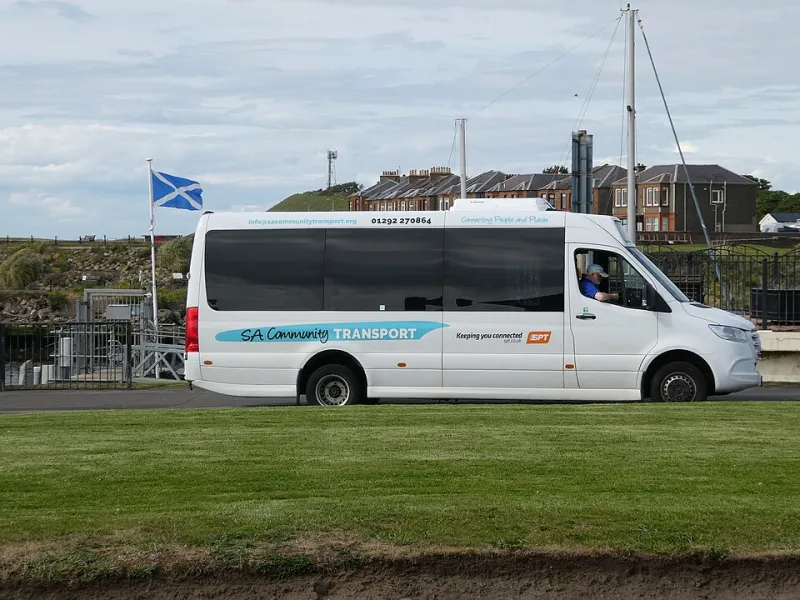
Photo: Billy McCrorie , CC BY-SA 2.0, via Wikimedia Commons
Membership organisations in the transport sector have a familiar problem. Their networks are valuable, but value is too often expressed through attendance figures, newsletter open rates and the warmth of an annual conference. For leaders of community transport organisations, local authorities and partner bodies, the question in 2026 is more demanding: what practical help does membership actually provide when skills are scarce, procurement is complex and policy keeps moving?
The answer is not more communication. It is more rooms where members can do useful work together. The seven formats below are designed to be run by a membership body or transport-focused organisation without creating an entirely new bureaucracy. Each should have a clear purpose, a named lead and a simple way of measuring whether it has helped.
1. Peer review panels
A peer review panel brings a small group of experienced officers or operators together to examine a member's service plan, depot relocation, tender strategy or accessibility improvement. The session is confidential, chaired by the membership body and focused on constructive challenge. The member leaves with an action note, not a general conversation.
To run it well, keep the panel to three or four people, circulate a short briefing pack in advance and agree the questions the member wants answered. Measure the number of actions adopted within six months. For community transport organisations, this can be a low-cost alternative to expensive consultancy and a way to test assumptions before a funding bid is submitted.
2. Benchmarking clubs
Benchmarking is most useful when it compares like with like and when the definitions are stable. A club might track cost per passenger journey, vehicle availability, punctuality, staff turnover, volunteer hours and call-handling performance. Data should be submitted quarterly, anonymised and discussed in a closed session.
The membership body's role is to curate the indicators and protect confidentiality. The measurable value is not the data alone but the decisions it prompts: a member discovers that its vehicle downtime is unusually high, or that its volunteer recruitment pipeline is weaker than peers. Over time, the club can publish aggregate trends that help the whole sector make its case to funders.
3. Shared procurement clinics
Procurement is a recurring source of anxiety, particularly for smaller operators that lack dedicated commercial staff. A shared procurement clinic offers short, structured sessions with legal, procurement or framework specialists. Members bring a live tender, a framework question or a contract clause they do not understand.
The clinic should not become a general advice line. It works best with a booking system, a short pre-submission form and a follow-up note. Measure the number of members supported, the value of contracts reviewed and the improvements made to tender documents. For membership bodies, this is a tangible service that can be promoted directly to finance and operations leads.
4. Short-term secondments
Secondments are often discussed as a leadership development tool, but they can also solve immediate operational problems. A two-to-eight-week placement between member organisations can help one organisation cover a specialist task while giving the other access to new practice. Examples include accessibility auditing, scheduling, volunteer coordination or policy analysis.
Success depends on a clear brief, agreed supervision and a commitment to share the output. The membership body can act as broker, matching needs and providing a simple agreement template. Measure the skills gained, the outputs delivered and whether the secondee remains in the sector. Short placements are often more realistic than long exchanges for small community transport operators.
5. Mentoring pairs
Mentoring can be vague. A structured programme is not. Match an experienced leader with a newer manager for a fixed six-month cycle, with agreed boundaries, a small number of meetings and a focus on a specific challenge such as succession planning, board development or service redesign.
The membership body should provide a light-touch framework, not a heavy curriculum. Measure participation, completion and self-reported confidence. Crucially, track what happens next: whether the mentee takes on a larger role, whether the mentor reports fresh perspective, and whether the pair continues informally. This format is especially useful where the sector faces retirements and thin management benches.
6. Policy helpdesks
Policy helpdesks respond to the questions members ask when a consultation lands, funding rules change or a regulatory requirement needs interpretation. A rota of subject experts can provide a short written response within an agreed service standard. The helpdesk should not replace legal advice, but it can help members understand the practical implications and signpost reliable sources.
Measure response times, the number of queries resolved and the themes that recur. Those themes are valuable intelligence for the membership body's own policy work. If ten members ask the same question about eligibility for a community transport fund, that is a signal for a briefing or a member event.
7. Curated resource libraries
A resource library is not a document dump. It is a maintained collection of templates, case studies, contract clauses, accessibility guidance and evaluation frameworks that members can adapt. Curation is the service. Each item should be dated, attributed and reviewed on a regular cycle.
Measure downloads and, more importantly, reuse. Ask members to report when a template saved time or improved a bid. A library works best when it is organised around tasks, such as preparing a tender, recruiting volunteers or assessing accessibility, rather than around the membership body's internal departments.
Making member value visible
The common thread is not networking for its own sake. It is structured help that reduces risk, saves time and builds capability. Membership bodies should report on these formats in an annual member value statement, using simple measures: actions adopted, benchmarks used, contracts improved, skills gained and queries resolved.
For community transport organisations, the appeal is practical. They need support that fits around service delivery, not another meeting to attend. For the membership body, the reward is a clearer answer to the question that funders and boards increasingly ask: what does the network actually do? In 2026, the strongest answer is a set of working rooms where members leave with something they can use.