The Everyday Test: Judging Regional Transport by Daily Performance in 2026
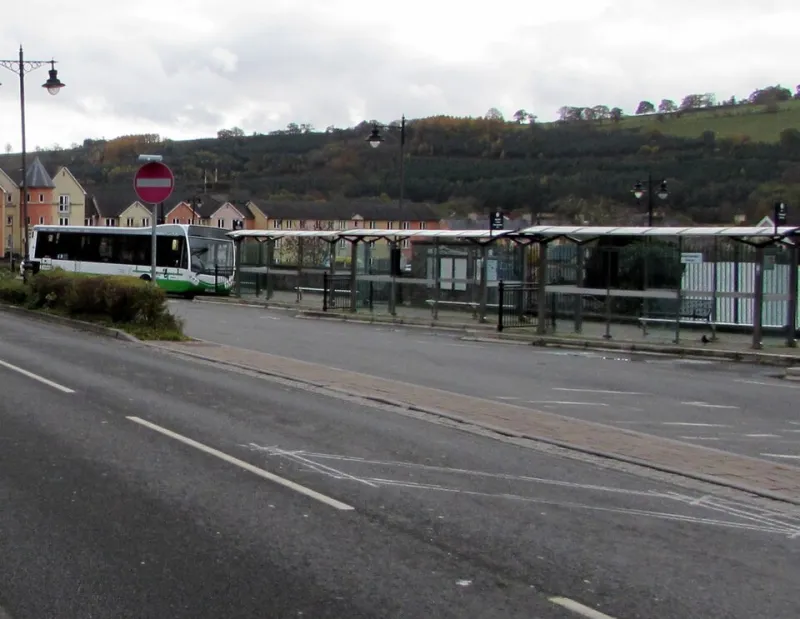
Photo: Jaggery, CC BY-SA 2.0, via Wikimedia Commons
Regional transport policy has a fondness for the visible moment: the ribbon, the rebuilt concourse, the new bus interchange. These are legitimate achievements. But the outcomes that matter to regional development are rarely produced on opening day. They are produced on ordinary Tuesdays, when a commuter can rely on a connection, a care worker can reach a client, and a small firm can recruit from a wider labour pool.
In 2026, the pressure on councils, combined authorities and member organisations is to demonstrate that transport investment changes lives and places. That requires a more disciplined conversation about performance. The argument here is not that new infrastructure is unimportant. It is that regional development outcomes depend more on journey-time reliability, interchange quality and everyday operating performance than on headline openings.
The gap between ceremony and service
A scheme can open on time, on budget and with a favourable benefit-cost ratio, yet still fail the everyday test. A new station may be poorly connected to local buses. A road improvement may shorten the average journey while making peak-hour times more erratic. A bus priority measure may improve punctuality on paper but not at the stops where passengers actually wait.
The risk is not that schemes are bad. It is that appraisal and evaluation reward the wrong signals. Opening-day metrics are easy to communicate. Reliability is harder: it requires baseline data, consistent definitions and a willingness to publish results that may be unflattering. Yet reliability is precisely what shapes whether people accept a job, whether a business locates in a town centre, and whether a community transport service can plan its day.
A reliability-first scorecard
The framework below is deliberately practical. It can be used by local transport authorities, combined authorities, community transport organisations and membership bodies as a shared language for scheme appraisal and post-delivery review. Each domain should be scored from one to five, with the evidence published alongside the score. The aim is not a single aggregate mark, but a structured conversation about trade-offs.
| Domain | Core question | Suggested indicator | Evidence |
|---|---|---|---|
| Peak variability | Does journey time hold when demand is highest? | 90th percentile journey time divided by median journey time in morning and evening peaks; service punctuality at key stops | Automatic vehicle location data, bus open data, operator performance reports |
| Interchange quality | Can passengers move between services without losing time or confidence? | Median wait time between connecting services; proportion of interchanges that are step-free; availability of real-time information | Interchange audits, passenger surveys, accessibility assessments |
| Accessibility | Can target communities reach essential services and opportunities? | Share of residents within 30 or 45 minutes of employment, education and health services by public transport | Transport modelling, accessibility mapping, local authority service data |
| Carbon and air quality | Does the scheme shift trips towards lower-carbon modes? | Estimated carbon per passenger journey; mode shift by corridor; exposure to poor air quality at transport interchanges | Emissions modelling, traffic counts, monitoring data |
| Labour-market reach | Does the scheme connect people to real jobs and employers to real workers? | Number of jobs accessible within 45 minutes by public transport from priority neighbourhoods; employer recruitment catchments | Employment data, employer surveys, skills partnership evidence |
| Operating resilience | How quickly does the network recover from disruption? | Time to restore normal service after incidents; accuracy and timeliness of passenger information | Incident logs, control-room data, customer feedback |
A scorecard of this kind should not become a box-ticking exercise. Its value lies in making explicit what a scheme is expected to deliver in ordinary conditions. A high modelled benefit that depends on perfect connections is not the same as a modest benefit that survives a wet Monday in November.
Applying the scorecard before delivery
Before a scheme is approved, the scorecard should be used to set baselines and minimum performance expectations. This is not about adding another layer of appraisal. It is about asking design teams to show how reliability will be protected in operation. For example, a new employment site should be assessed not only for road capacity but for the frequency and span of public transport serving shift patterns. A bus interchange should be assessed not only for capital cost but for walking distances, shelter, information and the coordination of timetables.
Combined authorities can embed these indicators in assurance frameworks and local transport plans. Councils can use them in Bus Service Improvement Plans and related delivery agreements. Membership organisations can help by offering a common template, so that members are not inventing separate scorecards for every funding bid. The point is to make reliability visible at the point when design choices are still open.
After delivery: publish the ordinary
Too often, evaluation is treated as a postscript. A better approach is to publish a short scorecard at twelve and twenty-four months after opening, alongside the usual delivery updates. This should include the baseline, the target and the outturn, with a plain explanation of any gap. Local transport authorities should report results to scrutiny committees. Operators should be rewarded for recovery and information quality, not only for punctuality averages that can hide variability.
For regional development, the most useful comparison is not between this scheme and a hypothetical alternative. It is between the promises made at approval and the service people actually experience. A scheme that improves access to jobs in a priority neighbourhood, even modestly, may be more valuable than a larger scheme that mainly speeds up journeys for people who already have good connections.
The case for a quieter test
A reliability-first approach is not a counsel of caution. It is a way to make transport investment more ambitious about the things that last. Ribbon-cutting tells a story about intent. Reliability tells a story about delivery. In 2026, regional development needs more of the second story, told honestly and with evidence that members, residents and businesses can use.