The Settling-In Period: What a New Transport Scheme Needs After the Ceremony
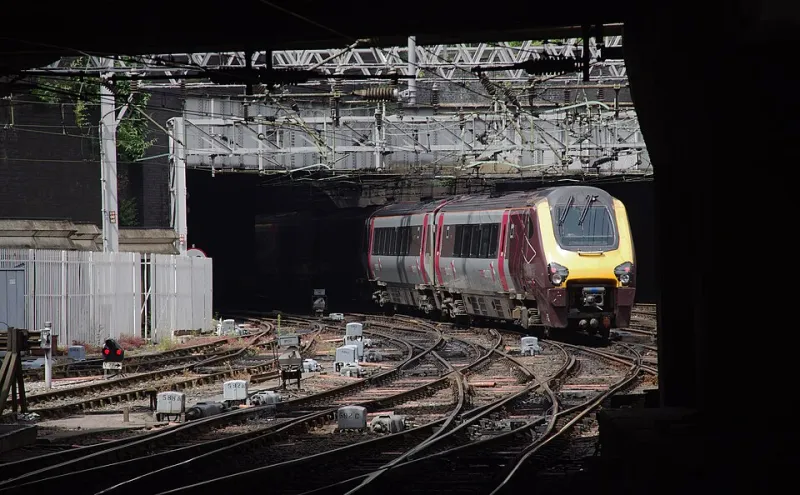
Photo: mattbuck (category), CC BY-SA 3.0, via Wikimedia Commons
A new station, bus corridor or interchange is usually opened with a clear story: investment has arrived, journeys will improve, and the region will feel the benefit. The ceremony matters, but it is not the test. The test begins the next morning, when ordinary passengers arrive with ordinary expectations and discover whether the scheme works in practice.
The first 100 days are a settling-in period, not a victory lap. They shape public trust, expose design assumptions and determine whether promised regional value starts to materialise. They are also the point at which delivery teams often disperse and attention moves to the next funding bid. That is a mistake. A scheme needs a deliberate post-opening plan, just as it needed a business case.
Keep the team together, but change its job
On opening day, the project should not simply hand over to operations and disappear. A small transition team should remain in place for at least three months, with a clear remit to observe, troubleshoot and report. Its role changes from building the scheme to making it work for passengers.
In practice, that means a daily stand-up involving the operator, the local transport authority, the station or interchange manager and relevant contractors. A single issue log should record faults, complaints, near-misses and emerging pressures. Each item needs an owner and a response time. The point is not bureaucracy; it is to stop small problems becoming settled weaknesses.
This is particularly important in 2026, when funding is tight and every scheme is expected to demonstrate value quickly. A well-run settling-in period produces the evidence that future decisions depend on.
Information that survives contact with passengers
New transport schemes are often designed around digital information. Passengers still need physical reassurance. Wayfinding must be tested from the passenger's point of view, not the architect's. Can someone arriving for the first time find the right platform, bus bay or cycle parking without asking? Is the signage readable at night? Are lifts and accessible routes obvious?
Before opening, run test journeys with people who are not familiar with the scheme: wheelchair users, older people, parents with buggies, visitors and people with limited English. After opening, keep listening. A common failure is to assume that real-time data is accurate because the system says so. Check the feeds, the displays and the journey planners against what is actually happening.
Staff presence matters too. A visible, well-briefed team in the first weeks can resolve confusion faster than any app. That may mean temporary staffing beyond the normal establishment, but it is usually cheaper than a month of avoidable complaints.
Teething problems need a disciplined response
Every new scheme has teething problems. Ticket machines jam, lifts fail, bus bays are too tight, drainage backs up, lighting is wrong, or the first services run late because a junction does not work as modelled. The question is not whether these issues appear, but how quickly and honestly they are handled.
Categorise faults by passenger impact rather than by contractual convenience. A flickering display is minor; a blocked accessible route is not. Publish internal response standards and review them weekly. Keep spares and cleaning schedules under review. If a problem will take weeks to fix, say so and provide a temporary workaround.
Operators should also watch for emerging operational pressures that were not visible in trials: dwell times at peak, crowding on connecting services, taxi rank congestion, or conflicts between buses and cyclists. These are design lessons for future schemes as much as problems for this one.
The local economy does not switch on automatically
A new interchange can support nearby businesses, but not without work. Passengers need clear walking routes to town centres, safe crossings and simple maps showing shops, services and employment sites. Local businesses need to know what is changing and how to benefit.
In the first 100 days, arrange practical engagement with business improvement districts, employers, taxi operators and community transport providers. Ask what is not working: delivery access, loading bays, evening footfall, staff travel. A short welcome pack for local firms and a regular drop-in session can be more useful than a formal launch event.
The regional development test is not simply whether passenger numbers rise. It is whether the scheme connects people to jobs, services and spending in a way that strengthens the local economy. That requires attention to the last few hundred metres as much as the main infrastructure.
Measure what was promised, and publish the baseline
Before opening, record the baseline: patronage, journey times, reliability, satisfaction, access to jobs and services, and local business sentiment. After opening, monitor against that baseline rather than against mature-year forecasts. Early ridership is often lower than the long-term projection, and that is not automatically a failure.
Use weekly trends as well as monthly reports. Look at peak and off-peak separately. Check whether the people using the scheme are the people it was meant to serve. If a new bus corridor is attracting existing car users but not connecting deprived neighbourhoods, the promised regional benefit may be weaker than the headline suggests.
Report findings to the scheme board and to members in a form they can use. A short monthly dashboard with clear commentary is more valuable than a lengthy data pack that nobody reads. Where assumptions have changed, explain why.
Communicating early failure without losing trust
Things will go wrong. A service will be cancelled, a lift will break, a connection will be missed. The public response should be rapid, specific and human. Acknowledge the problem, explain what is being done, give a timescale and follow up.
Avoid defensiveness and avoid blaming passengers. Brief local councillors, MPs and media contacts early so they are not blindsided. Monitor social media and local Facebook groups, but respond through the same channels passengers use. A simple 'you said, we did' loop in the first 100 days can build more trust than a polished launch campaign.
Trust is not built by perfection. It is built by how an organisation behaves when perfection fails.
A handover that lasts beyond day 100
At day 30, 60 and 100, hold a structured review. What has been fixed? What remains? Which temporary arrangements should become permanent? What lessons should be written into the next scheme?
Retain a small optimisation budget beyond opening. It is often the most cost-effective money spent on the scheme, because it turns passenger feedback into practical improvement. Share the lessons with peer organisations through member networks and regional forums.
The opening ceremony is a beginning. The settling-in period is where a scheme earns its place in the region.