When the Light Goes: A Winter Evening Review for Transport Operators
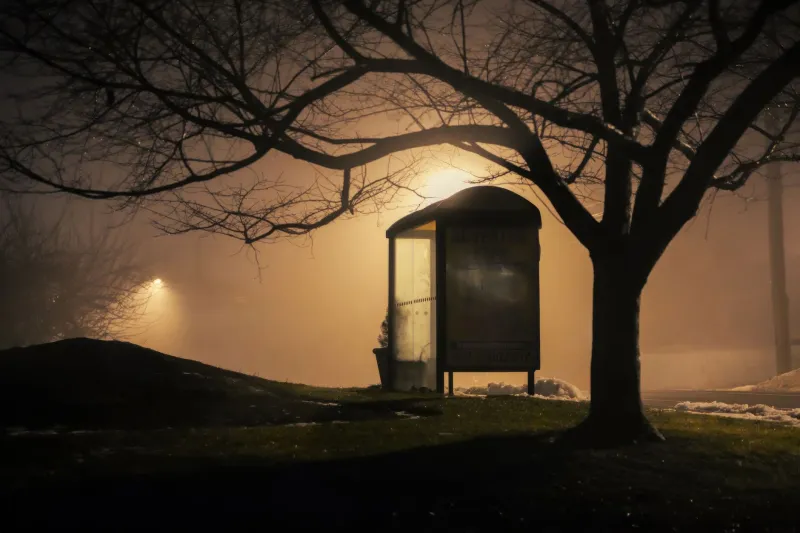
On the last Sunday in October, the transport network gains an hour and loses the light. By the middle of November, many passengers are making their evening journey in darkness, and by December the school run, the commuter trip and the last bus home can all take place after sunset. That shift deserves more attention than it usually receives. Too often it is folded into a general winter-readiness programme dominated by gritting, heating and vehicle checks. Those matters are essential, but they do not answer the passenger question: can someone see, understand and feel safe using the service after dark?
The clock change is not a maintenance season
A winter maintenance plan asks whether the depot is ready. A winter evening review asks whether the passenger journey is ready. The two overlap, but they are not the same. Shorter days affect the legibility of stop flags, the visibility of staff, the usefulness of real-time displays and the confidence of anyone walking to or from a service. They also expose the difference between a network that is merely running and a network that is usable.
For community transport providers and local authorities, the risk is particularly acute at unstaffed stops and infrequent services. A passenger who misses a bus after dark may face a long wait in poor light or an unfamiliar walk home. A frail passenger may decide not to travel at all. The audit should therefore begin with the people the service exists to carry, not with the assets the operator happens to own.
Begin at the stop, not the depot
The first test is simple: would a stranger recognise this as a stop after dark? At many locations, the answer depends on a single street light, a timetable case that has yellowed, or a flag that is invisible from the approach direction. Operators and local highway authorities should map responsibility for each stop and then check the basics: illumination of the flag and shelter, legibility of the timetable, contrast of any real-time display, and the condition of the pole or post. Glare matters as much as light. A bright source that throws shadows across the footway can make a stop less safe, not more.
Community transport adds a further dimension. Dial-a-ride and demand-responsive services often collect passengers from residential locations with no formal stop at all. In those cases, the review should consider the pick-up point, the approach path and the driver's ability to identify the passenger safely. A short written standard for evening pick-ups is more useful than an assumption that drivers will manage.
The interchange test
Interchanges concentrate risk. They also concentrate opportunity. A bus station, rail station or town-centre hub should be checked as a single journey rather than a set of separate premises. Are the walking routes between stands and entrances lit continuously? Are wayfinding signs readable from a distance and at an angle? Are staffed hours aligned with the last services, or does the booking office close while passengers are still waiting? Is there a visible point of assistance when a connection is missed?
Staff presence need not mean staffing every hour of the evening. It does mean deciding where a human presence adds most value and making that decision explicit. A single member of staff at a disrupted interchange can be more useful than a general information screen. The review should record when staff are present, what they are trained to do and how passengers can find them.
Information when the timetable bends
Real-time information becomes more important after dark because uncertainty is harder to manage. A passenger who can see a queue and read a familiar street can absorb a delay. A passenger waiting in the cold at an unlit stop cannot. Displays should be checked for brightness, viewing angle and readability in wet conditions. Where screens are absent, the operator should confirm that telephone lines, apps and social channels carry the same message, including the practical detail passengers need: which stand, which entrance, which alternative service.
Disruption messaging should be written for the journey, not the incident. Telling passengers that a service is delayed is less useful than telling them where to wait and what to do next. For smaller operators, a simple template for evening disruption messages can prevent inconsistent communication between drivers, controllers and the enquiry line.
The walk to and from the service
The passenger journey does not end at the vehicle door. The last few hundred metres often determine whether an evening service is perceived as usable. The review should examine crossing points, footway lighting, obstructions, shared paths and station forecourts. Some of these assets sit outside the operator's control, which is precisely why regional bodies have a role. A bus operator can report a dark footpath; a local authority can fix it; a combined authority can join the two up.
It is worth asking passengers and frontline staff where the difficult points are. Drivers see the same stops every night and often know which ones feel exposed. Community groups can identify routes that older or disabled passengers avoid after dark. That local knowledge is a practical resource, not a courtesy exercise.
A pre-cold-snap checklist
Before the first serious cold snap, members should be able to answer the following questions for every evening service:
- Is every stop and pick-up point visible from the approach direction after dark?
- Are timetables and real-time displays readable in low light and wet weather?
- Are staffed hours and assistance points aligned with the last departures?
- Do disruption messages tell passengers where to wait and how to continue their journey?
- Are walking routes between stands, entrances and nearby streets lit and unobstructed?
- Has responsibility for each lighting and footway defect been recorded and escalated?
- Have drivers and controllers been briefed on evening passenger safety and assistance?
- Have passengers and community groups been asked which routes they avoid after dark?
Make the review repeatable
The value of the exercise lies in repetition. A one-off inspection in November will miss the problems that appear after a storm, a bulb failure or a temporary closure. The findings should have an owner, a date and a route into the organisation's winter governance. Where defects sit with another body, the record should show who has been contacted and when. Members can then use the evidence to update contracts, service planning and communication arrangements.
The clock change is a predictable event. The passenger experience it creates should not be treated as an unavoidable consequence of winter. A focused evening review gives operators and regional bodies a practical way to keep services visible, understandable and usable when the light goes.