From Headline Benefits to Hard Questions: A Boardroom Routine for Transport Approvals
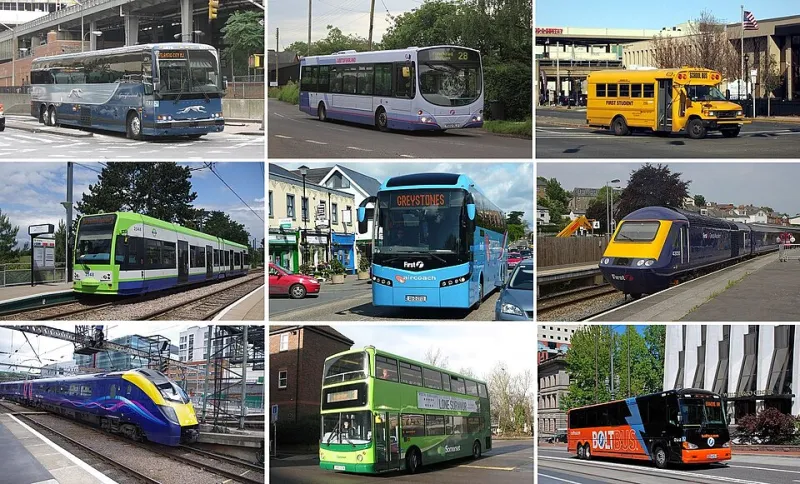
Photo: Clockwise from top left: File:Greyhound Prevost X3-45 (2009 scheme).jpg - AEMoreira042281 File:Bishops Lydeard Station Road - First 60918 (YG02DLJ).JPG - Geof Sheppard File:First Student USA minibus 215516.jpg - AEMoreira042281 File:Newport railwa
Regional transport business cases arrive at board tables with a familiar shape: a compelling problem, a preferred option, a benefit-cost ratio and a request for approval. The papers can run to hundreds of pages, yet the decisive questions are often simple. In 2026, with pressure on local transport funding and a growing emphasis on devolved delivery, members need a routine that tests not merely whether a scheme is worthwhile in theory but whether it can be delivered, governed and judged in practice.
The following twelve questions are not a substitute for specialist appraisal. They are a boardroom discipline. They should be asked before the green light is given, recorded in the minutes, and revisited after opening.
Begin with the binding constraint
1. What problem is the scheme actually solving, and is transport the binding constraint? A business case should identify the outcome the region needs — access to work, health services, education, freight reliability or town centre viability — and show why transport is the limiting factor. If poor broadband, planning rules or childcare availability are the real barriers, a new service may be an expensive distraction.
2. What does the demand evidence measure, and what does it omit? Modelled trips are not the same as observed behaviour. Ask whether evidence includes suppressed demand, journey purposes, time-of-day patterns and the needs of people without a car. For rural and cross-boundary services, test whether the model captures trips that currently do not happen because the service is absent or unusable.
3. Which assumptions would change the answer? A robust case identifies the two or three variables that matter most — patronage, fare revenue, operating cost, land value or developer contributions. Members should see the sensitivity range, not a single central forecast, and should know what would happen if the optimistic end of the range fails to materialise.
Test cost and capacity realism
4. How was the cost estimate built, and what is excluded? Compare outturn costs from comparable schemes, not just early estimates. Check whether contingency is proportionate, whether inflation and wage pressures are reflected, and whether costs such as depot upgrades, utility diversions, stop works and ongoing maintenance sit inside or outside the headline figure.
5. Who will actually deliver the work? A scheme can be approved without a credible supply chain to build or operate it. Ask about local contractor capacity, workforce availability, specialist skills and the pipeline of similar projects in the region. For smaller operators, consider whether spares, engineering support and training are available at the scale required.
6. Is the timetable credible, including statutory processes? Consultation, planning, procurement, safety approvals and land assembly rarely compress neatly. A timetable that assumes everything runs to plan is a warning sign. Members should see the critical path and the consequences of slippage for funding deadlines and service start dates.
7. What happens to the operating economics after launch? Capital approval is only part of the decision. Ask for a multi-year operating model covering fares, subsidies, staffing, fuel or energy, maintenance and replacement. If the service depends on a funding stream that ends or changes, the board should see the fallback.
Allocate risk and accountability
8. Who carries each material risk, and are they equipped to manage it? Risk allocation should be explicit: demand risk, construction risk, operating risk, regulatory risk and reputational risk. A risk transferred to a party that cannot price or manage it often returns to the public sector later, with interest.
9. What are the break points and exit routes? Good governance includes decision gates, performance thresholds and, where appropriate, contractual break clauses. Boards should know what would trigger a review, who has authority to pause or rescale the scheme, and how sunk costs would be treated.
10. How will local economic value be captured, not just assumed? Regional transport investment should leave capability behind: skills, supply chain relationships, apprenticeships and small business participation. Ask how procurement and contract design will turn those ambitions into commitments, and how they will be monitored.
Judge the scheme after opening
11. What does success look like in the first year, and who is accountable for measuring it? Benefits claimed at approval should become indicators after opening: patronage, reliability, accessibility, journey times, fare revenue and user satisfaction. Assign responsibility for collecting and publishing the evidence, and agree the baseline before launch.
12. What is the plan if the scheme underperforms? Post-opening evaluation is too often an afterthought. A credible case sets out how lessons will be captured, how service patterns or fares might be adjusted, and how the region will decide whether to continue, modify or withdraw support.
The green light is a beginning, not a verdict
Boards are rightly asked to focus on value for money. But value is not established at the moment of approval; it is earned through delivery, operation and adaptation. The twelve questions above are designed to move scrutiny away from headline benefits and towards the things that determine whether a scheme justifies its place in a regional strategy.
For members, the practical step is to adopt the checklist formally. Require sponsors to address each question in the business case summary, not in an appendix. Record the board's conclusions and conditions. Then return to them after opening. That routine will not eliminate risk, but it will make approval a more honest act — and give the region a better chance of durable returns.