The Passenger’s First Five Minutes: Auditing How Service Changes Are Communicated
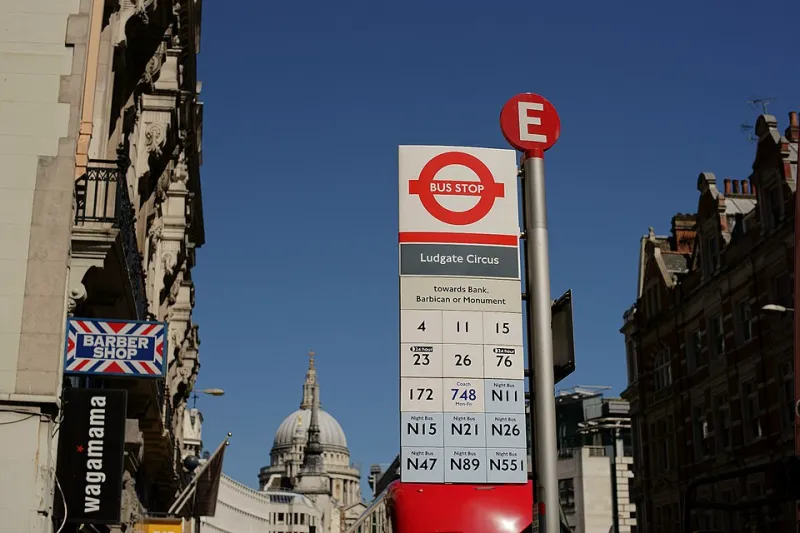
Photo: Peter Trimming , CC BY-SA 2.0, via Wikimedia Commons
Service changes fail quietly before they fail publicly. A timetable adjustment, a diverted route or a temporary stop closure can be operationally sound and still leave passengers stranded at the curb—not because the information was absent, but because it was not legible at the moment of need. For operators and regional authorities in 2026, the communication plan deserves the same scrutiny as the vehicle schedule.
This audit follows the passenger’s first five minutes: the moment they check a stop, open a phone or ask a member of staff what has changed. It is deliberately modest. It does not require a new platform or a large campaign budget. It requires testing the existing channels against real journeys and being honest about where the message breaks down.
Start at the stop, not the spreadsheet
Begin with a walk-round of the affected stops. Take the printed notice, the pole, the shelter and the surrounding street furniture as a passenger would see them. Is the notice at eye level? Is it protected from rain? Does it name the route, the direction and the dates in that order? A notice that begins with a service number but not the stop name assumes knowledge the passenger may not have.
Test three things at each location: findability, comprehension and action. Can a person find the notice without searching? Can they understand what changes and when? Can they act—by waiting elsewhere, taking an alternative or asking a named contact? If any answer is no, the notice is not finished.
The same test applies to temporary stoppages. A closure that lasts two days can still cause a week of complaint if the information appears only on a webpage. The physical stop is often the first and only channel a passenger uses.
Plain language is an operational control
Plain language is not a cosmetic preference. It reduces the risk that a correct instruction is misread. Replace ‘due to operational exigencies’ with ‘because of a driver shortage’. Replace ‘diverted via’ with ‘will not serve’ and then list the stops. Use dates and times in full: ‘from Monday 4 January until Friday 8 January’ is clearer than ‘w/c 4 Jan’.
Keep the sequence consistent across channels: what is changing, where, when, what passengers should do, and where to get help. A notice that leads with an apology before the route number wastes the passenger’s attention. A digital post that leads with a photograph of a meeting wastes it further.
Local authorities and operators should agree a shared template for service change notices. It need not be elaborate. A single page with fields for route, stops affected, dates, alternative arrangements and contact details will do more for consistency than a brand refresh.
Timing: publish before the network fills with rumour
The right time to publish is before the change becomes visible. For planned timetable changes, that means working back from the first affected journey, not from the date of the press release. For emergency diversions, it means publishing a holding message quickly and updating it when the duration is known.
A useful rule is to test the notice at the time of day when the passenger will use it. A notice published at 5pm on Friday for a Saturday morning change is technically live but practically late. A notice published in a dark shelter without lighting is also late in effect, even if it was posted on Monday.
Operators should also tell staff before the public. Drivers, call-centre teams and community transport coordinators are the first human channel. If they learn about a diversion from a passenger, the communication has already failed.
Digital channels need a human route
Websites and social media are necessary but not sufficient. They are strong at reach and weak at local specificity. A post that says ‘route 14 diverted’ without naming the affected stops leaves the passenger to guess. A journey planner that updates automatically is useful, but only for passengers who use it.
Pair digital updates with a named contact or a local office. For smaller operators and community transport schemes, a phone number that is answered during service hours is often more valuable than a new app. The test is not whether the channel exists, but whether a passenger can get a human answer within a reasonable time.
Staff scripts are part of the timetable
Give frontline staff a short script: the change, the dates, the alternative, and the escalation route. Keep it to a few lines and update it when the notice changes. A script that contradicts the poster is worse than no script, because it turns a service change into a trust problem.
Managers should listen to calls and observe conversations during the first week. The language passengers use will reveal which parts of the notice are working and which are being misunderstood. That feedback should feed the next update, not sit in a monthly report.
Accessibility is not an afterthought
Check notices for font size, contrast, and plain English. Provide alternative formats where reasonable, including large print and audio where local arrangements allow. Ensure digital updates work with screen readers and do not rely on colour alone to show a diversion.
Accessibility also means considering passengers who do not use smartphones, who have low literacy, or who are visiting the area. A notice that assumes a local app is not accessible to them. The standard is whether the information can be understood by someone who has not followed the consultation.
Measure whether the message landed
Count complaints, but do not stop there. Complaints measure failure after the fact. Better measures include: calls to the helpline about the change, missed connections at affected stops, driver reports of passengers asking for help, and the proportion of digital updates that include stop-level detail.
A short post-change review should ask three questions. Did passengers know before the first affected journey? Did they know what to do? Did staff have the same information? If the answer to any is no, the next change should start with the communication plan, not end with it.
A short audit for the next change
Before the next timetable adjustment, diversion or temporary stoppage, run a one-page audit. Walk the stops. Read the notice aloud. Ask a colleague who does not know the route to explain it back. Check the first and last affected journeys. Confirm the staff script. Set a review date for the first week.
None of this replaces operational competence. It simply ensures that a good operational decision is not lost at the curb. In 2026, passengers are not short of channels. They are short of clear, timely information at the point where they need it. The first five minutes are where that judgement is made.