The Stand-In Service: Auditing Rail Replacement Buses in 2026
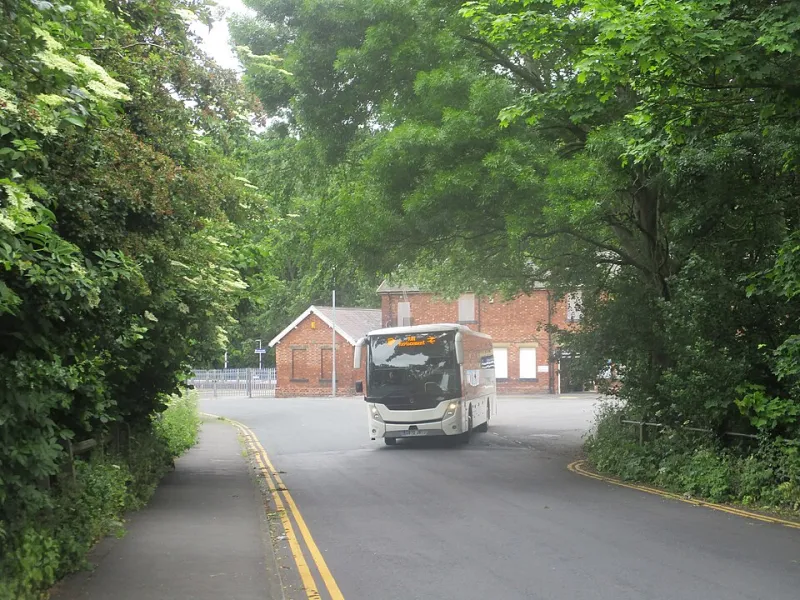
Photo: Mtaylor848, CC BY-SA 4.0, via Wikimedia Commons
Rail replacement services occupy an awkward place in the transport system. They are commissioned at short notice, delivered by contractors and bus operators, and judged by passengers against the railway they are standing in for. When they work well, they are barely noticed. When they fail, the damage travels further than the closed line: it reaches commuters, visitors, employers and the regional economy that depends on predictable connections.
In 2026, that gap deserves a more disciplined response. A rail replacement bus is not a peripheral courtesy. It is the visible face of the network during disruption, and it should be audited with the same seriousness as a scheduled bus route or a train service.
Why the stand-in deserves a full audit
Engineering works, signalling failures and planned closures are facts of railway life. Passengers accept that. What they find harder to accept is a replacement service that feels improvised: a stop with no clear sign, a bus with no staff presence, an app that shows a cancelled train but not the bus that is supposed to replace it.
For regional partners, the issue is not only customer service. Rail replacement quality affects how people view the reliability of a place. A hospital appointment, a college day, a shift at a distribution centre or a business meeting can all depend on the stand-in service being legible and dependable. If the replacement bus is treated as an afterthought, the region pays for it in missed connections and lost confidence.
The audit below is deliberately practical. It can be used by operators, local transport authorities, business improvement districts and regional bodies as a shared field test rather than a paper exercise.
Signage and wayfinding: the first test of trust
Start at the station entrance, not at the bus stop. Can a passenger who does not know the area find the replacement service without asking three people? Temporary signage should be clear, consistent and positioned at the decision points: the concourse, the ticket hall, the station exit, the forecourt and the stop itself.
Signs should name the destination and the next major calling point, not merely say that a replacement service operates. At night, check that signs are lit or placed where lighting is adequate. At larger stations, test the route with a wheelchair user or someone carrying luggage. If the signed route is obstructed, steep or confusing, the service has already failed its first accessibility test.
Staff presence: visible, informed and empowered
A clipboard near a bus is not the same as staff presence. Auditors should ask whether there is a visible, trained person who can answer three questions without hesitation: where the bus goes, when it leaves, and what assistance is available. Staff should also know how to handle missed connections, accessibility needs and onward travel.
Presence matters most at peak times, late evenings and at stations where passengers are unfamiliar with the area. The test is not simply whether someone is employed; it is whether that person has the information and authority to help. A replacement service without a competent point of contact shifts unnecessary risk onto passengers.
Accessibility from kerb to seat
Rail replacement vehicles should be accessible where required, and the journey should be accessible in practice. Check the route from the station to the stop, the boarding point, the ramp, the wheelchair space and the availability of assistance. Luggage, pushchairs and mobility aids all compete for space, and the audit should test a realistic peak load rather than an empty bus.
Operators and authorities should also review whether passengers with reduced mobility are given clear advance information about the replacement service. A step-free station entrance is of little use if the replacement bus picks up from an inaccessible kerb half a street away.
Real-time information: the bus must appear in the passenger's world
Passengers increasingly expect the replacement bus to exist in the same information environment as the train. That means station displays, announcements, journey planners and apps should show the replacement service as a service, not just as a disruption notice.
The audit should test whether the next departure is displayed, whether delays are communicated, and whether the information is consistent across National Rail Enquiries, operator apps and local bus information. Where bus open data is available, the replacement service should be represented accurately. If a passenger can see a cancelled train but cannot see the bus outside, the information chain has broken.
Interchange quality: where the stand-in meets the everyday network
A replacement bus is only as good as the place it drops people. Auditors should assess the stop location, shelter, lighting, seating, toilets, staff support and connection times to local bus services. A remote drop-off with no shelter and no onward information is not an interchange; it is an inconvenience.
Regional partners should pay particular attention to connections with hospitals, colleges, employment sites and town centres. The replacement service may be temporary, but the passenger's need to reach those places is not.
Disruption planning that protects regional confidence
The final test is whether the replacement service was planned as part of the disruption, or assembled after it. Good practice includes pre-agreed routes, contracted surge capacity, clear communication with local operators and businesses, and a named owner for passenger experience.
After the disruption, the audit should not end. A short review with operators, station staff and passenger representatives can identify recurring failures and turn them into contract requirements. Publishing a summary of performance, even in simple terms, signals that the stand-in service is being taken seriously.
A routine, not a one-off
Rail replacement audits should be routine spot checks, not emergency investigations. A quarterly programme of station visits, mystery journeys and information checks can build a realistic picture across the year. The results should be shared with local transport authorities and regional stakeholders so that lessons are applied before the next closure.
In 2026, passengers are entitled to expect that the bus standing in for a train is treated as part of the network. The stand-in service is a test of the whole system's honesty, coordination and respect for the people it carries. It deserves an audit that is just as practical as the service itself.